
We get a lot of questions about altitude here at OneSeed. We do play in the mountains a lot after all!
Altitude can effect people differently, but some we’ll cover some of the details here:
- What altitudes each trip reaches
- How altitude sickness can effect you
- How to prevent altitude sickness and monitor for it
- The signs of altitude sickness
- How OneSeed handles altitude sickness preparation before hitting the trail
- What happens on the trail if you are hit with a bout of altitude sickness.
Altitude sickness, also known as acute mountain sickness (AMS), can be very serious, but we build in rest days on our trips to allow trekkers to acclimate to the elevation. You can learn more about AMS here.
While you may not get altitude sickness, your tummy may be affected by the altitude and act up a bit, so if you’re feeling a bit gassy, it’s only the alti-tooties. Just call fair warning to those hiking behind you!

Patagonia
To give you an idea of how high you will be climbing, view the elevation chart below:
| Trip Name |
City/Town Name |
Elevation (Meter) |
Elevation (Feet) |
|
Kathmandu, Nepal |
1,402 |
4,600 |
|
Denver, Colorado, USA |
1,609 |
5,280 |
|
|
|
|
|
Santiago, Chile |
518 |
1,700 |
|
Empire State Building, New York City, USA |
443 |
1,454 |
|
|
|
|
| Chile: Trek & Sip |
optional day trek |
1,600 |
5,249 |
|
Denver, Colorado, USA |
1,609 |
5,280 |
| Chile: Epic Patagonia |
Torres del Paine |
1,100 |
3,608 |
|
Tuscon, Arizona, USA |
899 |
2,950 |
|
|
|
|
| Nepal: Annapurna Ascent |
Annapurna Base Camp |
4,130 |
13,459 |
|
Climb to the top of the Empire States Building (1,454ft) 9 Times |
3,987 |
13,086 |
| Nepal: Annapurna Discovery |
Deurali |
2,800 |
9,186 |
|
The length of the Golden Gate Bridge |
2,743 |
9,000 |
| Nepal: Everest Base Camp |
Everest Base Camp |
5,200 |
17,060 |
|
A 5K race is 3.2mi or about 17,000 |
5,181 |
17,000 |
| Nepal: Khumbu Pilgrimage |
Pangboche |
3,930 |
12,893 |
|
A typical height for skydiving |
3,962 |
13,000 |
| Nepal: Langtang Journey |
Kyanjin Gumpa |
3,730 |
12,237 |
|
About 4.5 times higher than the world’s tallest building, Burj Khalifa (2,722ft) |
3,733 |
12,249 |
Altitude sickness is caused by the “thinner” air at elevation, so you have difficulty getting enough oxygen. For a scientific explanation of what happens at altitude,visit here.
Symptoms can include headaches, loss of appetite, nausea, irritability, loss of coordination, dizziness, feeling weak, and trouble sleeping.
Before leaving for a trek, OneSeed staff will educate trekkers on altitude sickness and the signs and symptoms before hitting the trail. While on the trail, we have built in rest days to allow trekkers time to acclimate before hiking to higher altitudes. If anyone experiences symptoms of altitude sickness, OneSeed guides will stay with guests and escort them to lower elevations until they are feeling better and can rejoin the group.

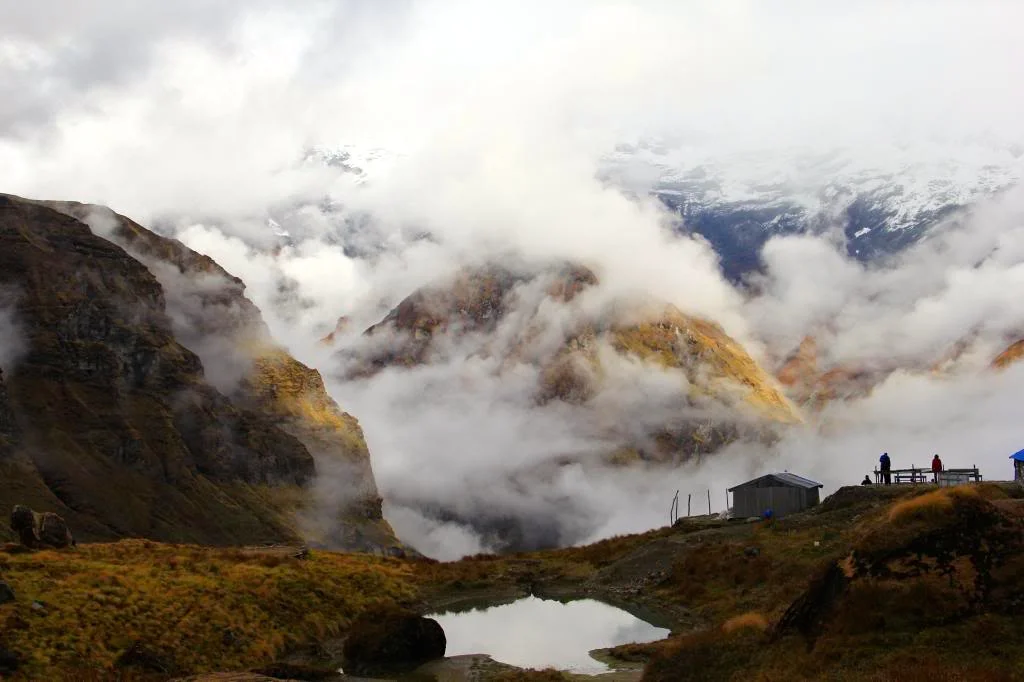
Annapurna Ascent
When hiking at high altitudes, make sure to drink lots of water, even if you aren’t thirsty. Staying hydrated can help reduce the effects of altitude sickness. Make sure to eat well rounded meals. Wearing a hat, sunscreen, sunglasses and layers are important as you are more exposed to the elements and the weather can change quickly. Trekking at a slow and steady pace and taking frequent breaks will help ensure you reach your goal!
For more information, visit the CDC website here.

Hiking in the Clouds: What Happens at Altitude
We get a lot of questions about altitude here at OneSeed. We do play in the mountains a lot after all!
Altitude can effect people differently, but some we’ll cover some of the details here:
Altitude sickness, also known as acute mountain sickness (AMS), can be very serious, but we build in rest days on our trips to allow trekkers to acclimate to the elevation. You can learn more about AMS here.
While you may not get altitude sickness, your tummy may be affected by the altitude and act up a bit, so if you’re feeling a bit gassy, it’s only the alti-tooties. Just call fair warning to those hiking behind you!
Patagonia
To give you an idea of how high you will be climbing, view the elevation chart below:
Altitude sickness is caused by the “thinner” air at elevation, so you have difficulty getting enough oxygen. For a scientific explanation of what happens at altitude,visit here.
Symptoms can include headaches, loss of appetite, nausea, irritability, loss of coordination, dizziness, feeling weak, and trouble sleeping.
Before leaving for a trek, OneSeed staff will educate trekkers on altitude sickness and the signs and symptoms before hitting the trail. While on the trail, we have built in rest days to allow trekkers time to acclimate before hiking to higher altitudes. If anyone experiences symptoms of altitude sickness, OneSeed guides will stay with guests and escort them to lower elevations until they are feeling better and can rejoin the group.
Annapurna Ascent
When hiking at high altitudes, make sure to drink lots of water, even if you aren’t thirsty. Staying hydrated can help reduce the effects of altitude sickness. Make sure to eat well rounded meals. Wearing a hat, sunscreen, sunglasses and layers are important as you are more exposed to the elements and the weather can change quickly. Trekking at a slow and steady pace and taking frequent breaks will help ensure you reach your goal!
For more information, visit the CDC website here.